If you have been watching the north end for the next big real estate shift, Shoreline 185th is hard to ignore. With light rail now open and the city continuing to refine the station area, this part of Shoreline is not a finished story yet. That creates both opportunity and complexity for buyers, sellers, and property owners trying to understand what transit-oriented development could mean here. Let’s dig in.
Why Shoreline 185th matters
The Shoreline North/185th Station opened for Link 1 Line service on August 30, 2024. Sound Transit lists the station at 710 NE 185th Street, with 494 parking spaces, 9 ADA spaces, 9 bike lockers, and 20 bike racks. In plain terms, this is built to function as a true multimodal hub, not just a stop along the line.
That matters because station areas often become focal points for housing, services, and new investment over time. In Shoreline, the city identifies the 185th Street Station Area as one of its countywide growth centers. That signals a long-term plan to concentrate more housing, jobs, transit, and shopping in this area.
What transit-oriented development means
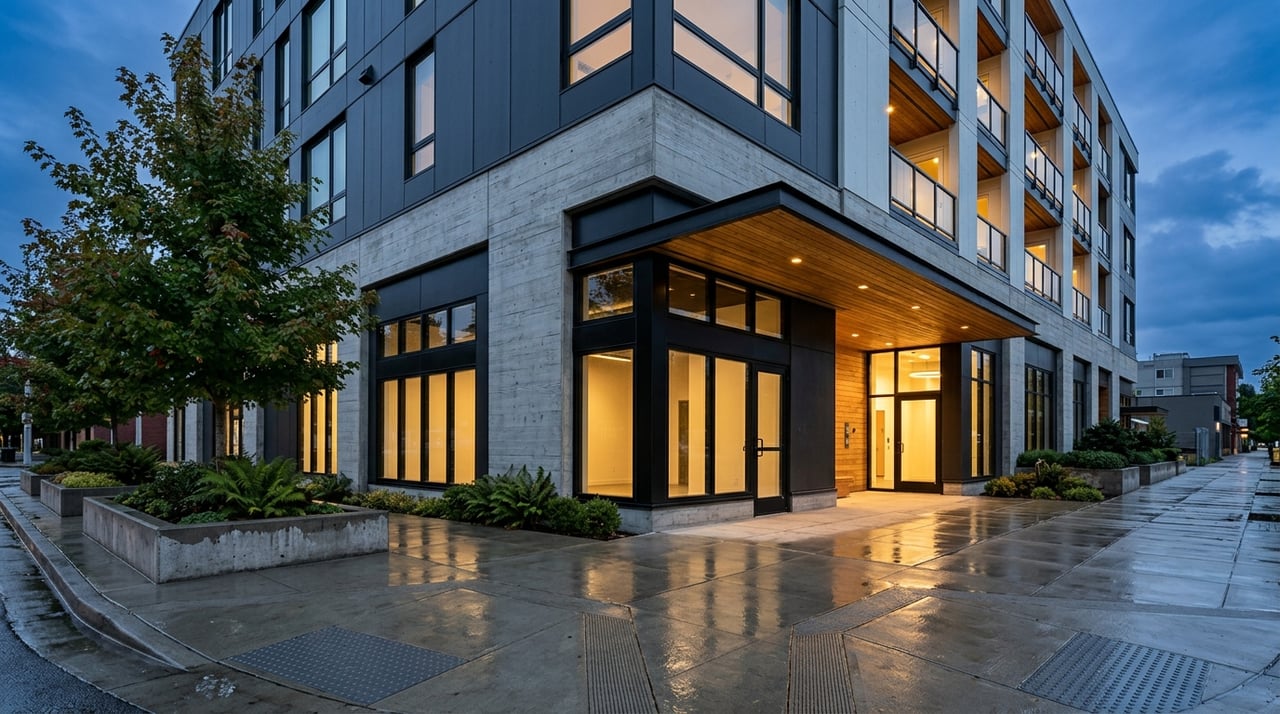
Transit-oriented development, often shortened to TOD, can sound technical. The basic idea is simple: it is compact development near a transit station that mixes uses like housing, jobs, and shopping within walking distance. Shoreline’s planning documents describe a similar pattern locally, with higher density closest to transit and lower density farther away.
For you as a property owner, buyer, or investor, the bigger point is location efficiency. A station area is not only about adding more buildings. It is about creating a place where transit and land use support each other, which can shape how people move, where new projects make sense, and how demand evolves over time.
Why the 185th corridor is still evolving
One of the most important things to understand about Shoreline 185th is that the area is still changing. Shoreline’s 185th Street Corridor Strategy describes the corridor as a Z-shaped connection between Aurora Avenue N, the station area, and North City. The city also notes that changes are expected to happen incrementally as redevelopment occurs.
That means you should not think of the station area as fully defined today. Shoreline is actively updating the station-area plan, and the city’s 2026 scoping notice says that work will address increased development capacity, current environmental conditions, and mitigation measures. The city has also said it is studying ways to better connect station areas and potentially allow more land uses in a small area near the station.
For real estate decisions, this is a key takeaway: the rail station is open, but the planning framework is still moving. If you own property nearby or are considering a purchase, current conditions matter, but so does the direction of city planning.
How to understand MUR-70
If you have looked at zoning maps around Shoreline 185th, you may have seen the label MUR-70. That stands for Mixed Use Residential with a 70-foot height limit. Shoreline describes MUR districts as intended mainly for multifamily development, with compatible nonresidential uses in appropriate locations.
The simplest way to think about MUR-70 is this: it is a station-area zoning district that supports mid-rise housing with some neighborhood-serving commercial activity. It is not just an apartment-only zone, and it is not a stand-alone commercial district either. For sellers and landowners, that can make a big difference in how a site is evaluated.
Still, zoning labels only tell part of the story. Because Shoreline is refining the station-area framework, parcel-level analysis should start with the latest zoning map, current code text, and the most recent subarea-plan updates. Older listings or quick summaries may miss recent changes.
Parking changed in a big way
Parking used to be one of the first filters many people applied when sizing up development potential. In Shoreline, that changed on August 11, 2025, when the City Council adopted Ordinance 1043 and eliminated vehicle parking minimums citywide. The city kept parking design standards in place and increased bike-parking requirements.
For buyers, sellers, and investors, this shifts the conversation. Parking is no longer the same hard limit on project feasibility that it once was. But it does not mean parking, access, circulation, and site design no longer matter. Those details still affect how a project functions and what can realistically be built.
What this means for property owners
If you own land or a home near Shoreline 185th, transit-oriented development can influence value in more than one way. In some cases, a property may appeal to traditional homebuyers. In others, the bigger opportunity may come from redevelopment potential, assemblage interest, or future mixed-use possibilities tied to station-area growth.
That is why a simple price-per-square-foot approach may not tell the whole story. A property near the station may need to be evaluated through both a residential lens and a land-use lens. The right strategy depends on the parcel, zoning, access, surrounding ownership pattern, and where the property sits within the current or future station subarea.
What buyers and investors should verify
Being close to light rail is a strong headline, but it is not enough on its own. In the 185th area, feasibility depends on how several moving parts fit together. Before you make assumptions about value or development potential, it helps to confirm the basics.
Here are some of the most important items to review:
- Exact parcel zoning and boundaries
- Whether the site is in the current station subarea or a future rezone phase
- Allowed uses, height limits, setbacks, and design standards under Chapter 20
- Frontage expectations and any review or rezone triggers
- Access, utilities, drainage, and other civil constraints
- Whether critical areas such as steep slopes, wetlands, or streams affect the site
- Whether shoreline jurisdiction or a separate shoreline permit path applies
- Whether the project could qualify for MFTE incentives
In other words, “near the station” is only the starting point. A site can look promising on a map and still become more complicated once entitlement, engineering, and permitting issues come into focus.
Why pre-application work matters
For more complex projects, Shoreline’s pre-application process can be an important early step. The city describes it as a preliminary meeting with staff before a full permit submittal, followed by written comments. That gives applicants a chance to spot issues earlier instead of discovering them after a concept is already far down the road.
The city’s checklist shows how detailed this early review can be. Depending on the proposal, applicants may need to provide the address and parcel number, existing and proposed use, number of units, conceptual floor plans, a site plan, and supporting materials such as critical-areas information, geotechnical details, water-availability information, and a solid-waste worksheet.
For you, that means strong opportunities near the station usually require more than a quick zoning glance. Early diligence can help separate an exciting idea from a truly workable one.
MFTE can affect the numbers
Another piece to know is Shoreline’s Multifamily Tax Exemption program. The city says the program is available to investors who build or rehabilitate four or more rental units, and the station-subarea MFTE boundaries now match the full light-rail subareas, including current and future rezone phases.
The program also requires a 20% affordability commitment and uses King County AMI-based thresholds. That matters because some station-area projects may depend on incentives as part of the financial picture. If you are comparing options near Shoreline 185th, MFTE eligibility may influence hold strategy, exit value, and rent assumptions.
The big takeaway for Shoreline 185th
Shoreline 185th is one of the clearest examples of how transit can reshape a local real estate market over time. The station is open, the city has identified the area for growth, and the planning framework is still being updated. That combination makes the area promising, but it also means you need current, parcel-specific information before making big decisions.
If you are selling, buying, or exploring redevelopment near 185th, the smart approach is to look past the headline and study the details. Zoning, incentives, site constraints, access, and timing all matter together. That is where local insight becomes especially valuable.
If you want help understanding how a specific property fits into the evolving Shoreline 185th picture, Chris Haynes can help you evaluate the opportunity with practical local guidance.
FAQs
What is transit-oriented development around Shoreline 185th?
- Transit-oriented development around Shoreline 185th refers to compact, mixed-use development near the Shoreline North/185th Station, generally designed to place housing, services, and other uses within walking distance of transit.
What does MUR-70 mean in Shoreline zoning?
- MUR-70 means Mixed Use Residential with a 70-foot height limit, a zoning district intended mainly for multifamily development with some compatible nonresidential uses in appropriate locations.
Why is the Shoreline 185th station area considered a moving target?
- The station is already open, but Shoreline is still updating the station-area plan and studying increased development capacity, environmental conditions, mitigation measures, and land-use changes near the station.
Did Shoreline remove parking minimums?
- Yes. Shoreline adopted Ordinance 1043 on August 11, 2025, eliminating vehicle parking minimums citywide while keeping parking design standards and increasing bike-parking requirements.
What should property owners research before marketing land near Shoreline 185th?
- Property owners should verify current zoning, subarea boundaries, allowed uses, development standards, site constraints, access and utility issues, and whether incentive programs like MFTE may apply.
What is Shoreline’s MFTE program for station-area projects?
- Shoreline’s MFTE program can apply to projects with four or more rental units, and it requires a 20% affordability commitment based on King County AMI thresholds.
Why is a pre-application meeting useful for Shoreline development sites?
- A pre-application meeting can help identify zoning, permitting, site-design, and technical issues early, and the city provides written comments after the meeting to guide the next steps.